I'm Jordan Kemp, an urban scientist and postdoctoral fellow at the Santa Fe Institute (SFI), working in the Emergent Engineering theme. I research how institutions, the built environment, and the broader economy shape our decisions. I work to understand how where we choose to live, the ties we form, and the resulting neighborhood structure all emerge through our (un)shared experiences, the markets, and the opportunities we can access.
In a world where AI provides more access to insights in the urban world, my work provides interpretive theory towards sense making, and identifying structural limits to policy and urban design. I do this by developing new statistical methods inspired by physics, population ecology, and information theory.
I am an affiliate researcher with the Institute for New Economic Thinking (INET) at Oxford, where I collaborate with the Complexity Economics group on disequeilibrium models of the labor market. Feel free to explore my work, and please get in touch if you'd like to discuss any of these ideas!
Statistical commonalities in Urban Sorting
information, organization, segregation
Sorting is a universal feature of heterogeneous human populations, creating spatio-structural barriers to reducing inequality. Recent evidence suggests that urban income sorting grows more complex at finer spatial scales. But what is the spatial structure of economic, socio-behavioral, and infrastructural variables? What role does physical and market design play in overcoming these spatioeconomic barriers? In results under preparation, my work shows that economic, demographic, occupational, and transportation data measured locally exhibit statistical commonalities across American cities. At what scale do these commonalities diverge? What does this say about how urban data and our experiences are sorted?
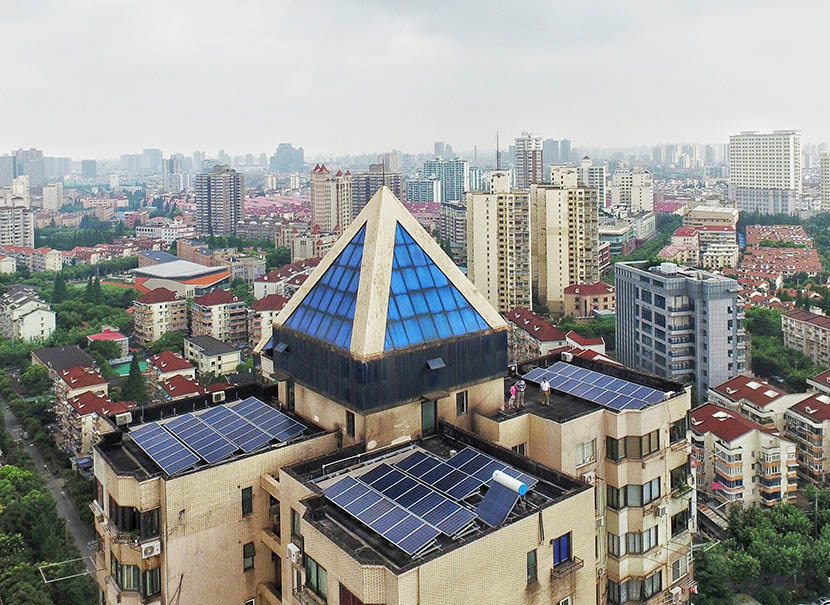
Growth in the Rebalancing City
spatial analyses, stochastic dynamics, housing, incomes
As capital and opportunity shift throughout the city over the span of decades, when do these result in improvement for existing residents? Is population turnover inevitable? My work establishes how type-dependent growth amplifies inequality, but what are the individual-level consequences of this unequal changes to housing and housing quality? In work under preparation, I show that U.S. cities exhibit persistent patterns of income rebalancing explained by processes of uniquely local, neighborhood growth. I find that disadvantaged neighborhoods experience more frequent upward movement in the income hierarchy, but with greater volatility.

Neighborhoods and the Emergent Mesoscale
neighborhoods, ecological analysis, multiscale dynamics
How do local changes to the built and social environments accumulate into mesoscale units that structure intraurban variation? I show that stable urban aggregates can hide substantial and opposing local and mesoscale dynamics, such as neighborhood revitalization, gentrification, and abandonment. But how do these structures depend on institutional configurations? How do emerge from bottom up processes, like preference and choice, and top down forces from the shifting macroeconomy?
Originally trained in physics, I now take an interdisciplinary approach, combining methods from statistical physics (e.g. stochastic nonequilibrium processes, phase transitions), theoretical ecology (e.g. selection, multiplicative growth), and the cognitive and learning sciences (e.g. perception, information theory, machine learning). Generally, I'm interested in how statistics and information can be used to understand not only uncertain behavior (as in my previous work), but anything from income dynamics and demographic trends to small business resilience. Examples of some of my prior projects are found here.
At INET, I'm actively involved in projects that predict new technology adoption, and that reconstruct and study global supply chains---topics that are critical for guiding more resilient policies as the world undergoes the green energy transition.
I completed my PhD in physics as an NSF Graduate Research Fellow at the University of Chicago Department of Physics. I studied in the Urban Science Lab under the advice of Luís Bettencourt and Arvind Murugan. In the past, I have conducted experimental research in both quantum computing and simulation using neutral cold atoms with the Bernien Lab at UChicago, and in gravitational wave detection with Rana Adhikari and the LIGO Group at Caltech